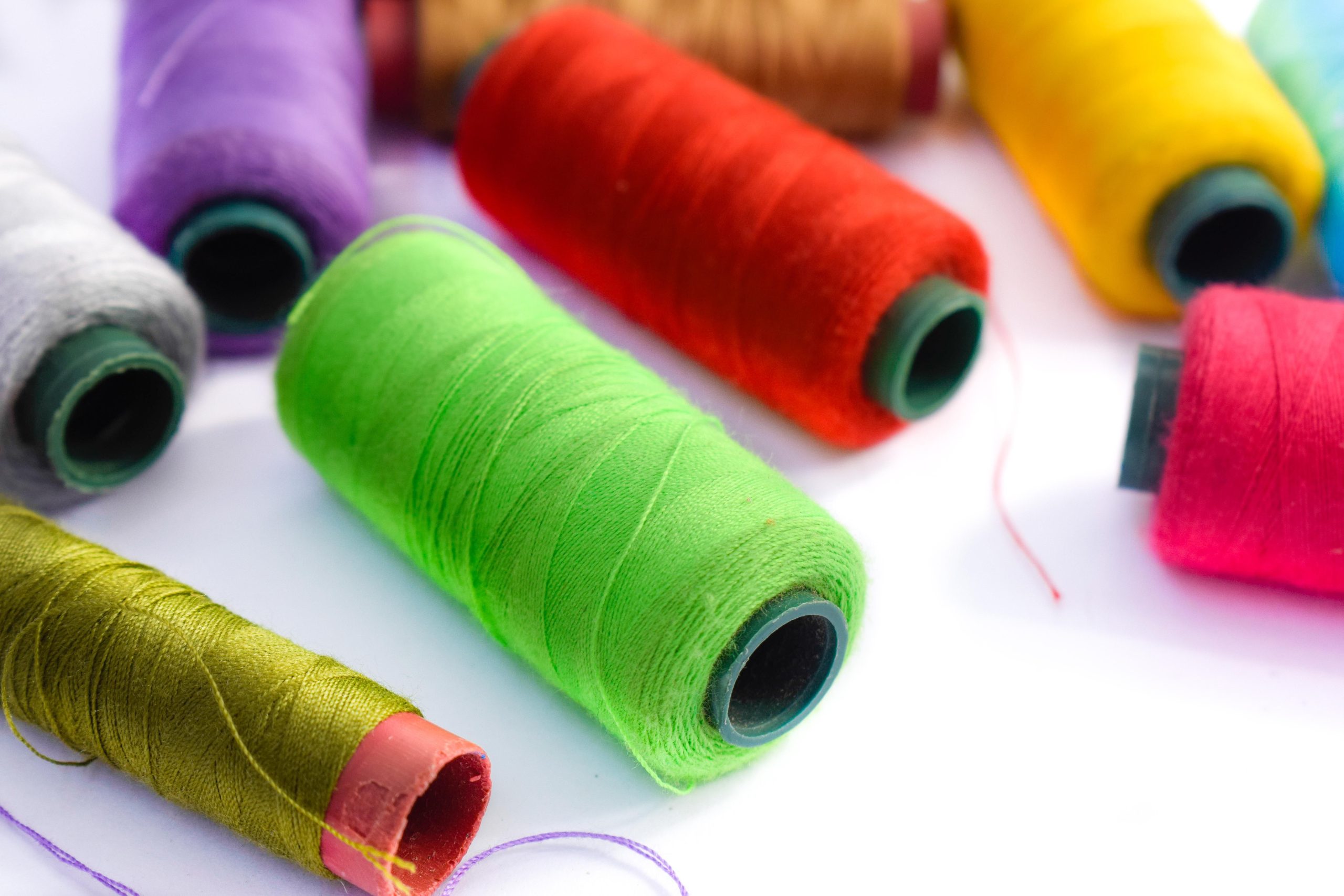
When we think about medical and healthcare apparel, the first things that usually come to mind are the fabric, protective properties, hygiene, and comfort then the sewing thread is there. The little but very important thing that people don’t pay attention to!
A sewing thread can be used on just a small segment of a garment, but it’s responsible for connecting various fabric panels. With clothes used over and over again, frequently exposed to disinfectants and constantly moved in order to provide food for the patients, a low-grade or inappropriate thread can quickly turn into a serious problem in the hospital room.
There are so many times you need to think about the type of thread to use, whether it’s for hospital scrubs or a lab coat, surgical gowns, clothes for the patient, or protective garments. The right thread should not only make a good seam but also be good for the entire life of the garment.
Table of Contents
Begin With The Purpose
No one sewing thread fits all healthcare garments perfectly! The first question manufacturers should ask is, “Where and how will the garment be used?”
A surgical gown might have a very different requirement, whereas a hospital scrub might have to be washed back and forth with the industrial washers a lot. A lab coat might need to be much more durable and easy to maintain, while protective attire could also be exposed to chemicals.
Manufacturers should take into account the following prior to picking a thread:
- Type of healthcare garment
- Fabric composition and thickness
- Frequency of washing
- Chemical/disinfectant exposure
- Sterilization requirements
- Expected garment lifespan
- Required seam strength and flexibility
When you know what you will use it for, then it will be much easier to choose a thread that will perform as you desire in real use.
Strength Matters, But It Isn’t Everything
Garments used in healthcare require dependable seams. A nurse’s uniform might get used more than a few times during its working day, for instance, when pulling a patient. The protective clothing can be subjected to even more mechanical forces.
Thus, tensile strength is an important factor to be taken into consideration when choosing threads. But the strength of thread alone might not be an obvious choice to make.
The thread should be compatible with the fabric, needle, and stitch and machine settings. In other situations, the thread may be strong, stronger than the fabric, and the fabric may be damaged first, rather than the thread.
Also, if the garments are to be used repeatedly, such as in healthcare settings, a healthcare fabric manufacturer needs to determine if the thread will remain strong after laundering and dry cleaning.
Think About Repeated Washing
Probably one of the very most demanding parts of healthcare clothing is washing. Hospital garments are a lot easier to wash as compared to the normal clothes and can be used multiple times.
Over time, thread may lose performance due to water, detergents, heat, drying, and pressing. A thread that functions without a hitch in its early days could cause problems after the hundredth wash and wear, and so forth.
Manufacturers therefore should test the thread after several washings as well as, if applicable, treatment with disinfectants.
The pleasant dimensional stability, resistance to moisture, and repeated wash and drying make polyester threads (trilobal polyester thread, textured thread) potential candidates as health care garments. The decision, however, must always be based on the application and specifications used.
Don’t Ignore Chemical Resistance
There are many cleaning and disinfection agents used in healthcare facilities. Depending on the application, a garment may come into contact with disinfectants, detergents, cleaning agents, or other substances.
With time, some thread materials may weaken from exposure to chemicals or be altered in looking or flexibility.
Therefore, manufacturers should be familiar with the chemicals that the final product will come in contact with and test the thread accordingly.
This is especially critical when the garment is for protective or specialized healthcare applications where failure to maintain a seam may compromise its protective purpose.
Colorfastness Is Part of Quality
While beauty may not be the most important consideration, assuring durability and safety is still important. Nobody wants a washed article to have faded or bled or changed in color during laundry.
The color should withstand rather reasonably the condition in which the garment will be used and cared for. Manufacturers may consider resistances to:
- Washing
- Water
- Perspiration
- Heat
- Light
- Disinfectants and chemicals
It’s also crucial that the thread matches the color across the production runs, particularly if suppliers are making big orders of hospital garments or branded healthcare garments.
Low Lint Can Make a Difference
Another factor to be considered is the presence of thread lint and hairiness.
In fast sewing the thread is continually fed through the needle, guides, and tension mechanism and through the cloth as it is formed. Surface hairiness may produce lint and lead to the cleanliness of the sewing area.
In some controlled and healthcare applications, therefore, manufacturers may want to use threads that have a smoother skin and lower hairiness.
A smoother-running thread may also result in more beautiful stitching and fewer sewing-related issues.
Comfort and Seam Flexibility
Healthcare professionals can spend many hours wearing the same garment. Consequently, it is important not to compromise on comfort.
A too tight, bulky, or rough seam can become uncomfortable and cause problems, especially in highly mobile parts of the body.
When choosing a thread the following factors need to be considered:
- Thread size
- Seam thickness
- Fabric flexibility
- Stitch density
- Garment movement
- Stretch characteristics of the fabric
When creating a stretchable healthcare fabric, the thread needs to be able to stretch and adapt to the regular movements without breaking or damaging any seams.
Safety Should Always Come First
If healthcare apparel contacts the skin directly or for a prolonged period, manufacturers should take into account the safety of the materials used in its construction.
Chemical treatments such as dyes, finishes, and coatings should correspond to the usage. In addition to the relevant customer specifications, regulatory requirements and applicable customer testing standards must be adhered to by the manufacturer.
This is significant, especially in the case of protective and specialty medical clothing. Just because a conventional apparel thread has good strength or appearance, it does not automatically qualify to use it.
Test the Thread on the Actual Sewing Machine
No matter how good the thread’s quality, it can still cause the sewing machine to malfunction.
Sewing trials are necessary before turning to large-scale production, and then manufacturers should observe:
- Thread breakage
- Needle heating
- Stitch consistency
- Thread tension
- Fraying
- Skipped stitches
- Seam puckering
- Machine stoppages
All these components—needle, thread, machine speed, machine tension, and stitch length and type—should be taken into account. This thread machine combination can sometimes be as critical as the specification of the thread.
Practical Testing Approach
A straightforward testing procedure can assist in making better decisions for manufacturers:
- Understand the garment’s end-use conditions.
- Choose appropriate materials and types of thread.
- Determine the strength and stretch in the thread.
- Test resistance to washing and relevant chemicals.
- Conduct a colorfastness test (if necessary).
- Run an experiment with sewing.
- Examine the strength and durability of finished seams.
- Comprehend outcomes and match customer & application requirements.
Testing it after a simulated wash or other treatment gives a much better ‘real world’ picture of its long-term performance.
Conclusion
In healthcare and medical uniforms, sewing thread can be a key element, but its significance is never taken lightly. The thread added value to the garment and contributed to the seam strength, garment durability, comfort and appearance, and overall reliability of the garment.
The optimum choice is not the strongest thread nor the cheapest. It is the thread that functions like the fabric, needle, machine, seam construction, and healthcare setting.
With the right selection and machine testing and realistic durability testing, manufacturers can minimize or eliminate seam breaks and seam failures, increase production quality, and produce healthcare garments that survive long after laundering and repeated wear and tear.